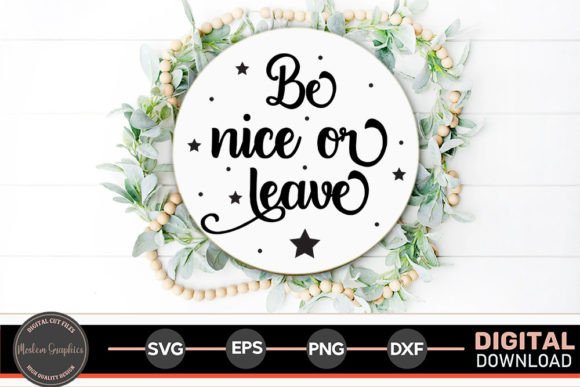
Be Nice or Leave: A Designer's Take on Home Sign SVG
As a designer who spends more time staring at stitch simulations than most people care to admit, I approach new digital embroidery file downloads with a healthy dose of skepticism. We have all been there: you buy a cute graphic, load it into your software, and realize the lines are too close together for a clean satin stitch, or the text is so small it will turn into a bird's nest on the first wash. That is why I was interested in putting the Be Nice or Leave - Home Sign Svg through its paces before committing it to a client project or adding it to my shop inventory.
This isn't just about whether the image looks good on a screen; it is about how it translates from a vector path to a tangible handmade product. The phrase itself carries a specific mood—sassy, direct, and slightly humorous. It fits perfectly into the current trend of "gentle boundaries" in home decor and apparel. When I first opened the files, my immediate thought was about placement. This design screams for visibility. It is not a subtle watermark; it is a statement piece.
From Vector to Thread: Assessing the Layout
The core of any successful embroidery project lies in the source file quality. Since this package includes SVG, PNG, EPS, and DXF formats, it offers flexibility for both cutting machines and embroidery digitizing software. However, as an embroiderer, my focus is strictly on how these paths convert to stitches. The typography in "Be Nice or Leave" appears bold enough to handle a substantial fill stitch without losing legibility. This is crucial. Thin, wispy fonts often fail in embroidery unless they are meticulously underlaid, but a blockier style like this suggests durability.
I envision this design working exceptionally well as a central motif on a heavy cotton tote bag. The structure of a canvas tote provides the stability needed for dense stitching, ensuring the text doesn't pucker the fabric. For a tote bag design, I would recommend using a cut-away stabilizer rather than tear-away. The weight of the thread required to make the letters pop against the canvas needs that permanent support to maintain the crisp edges of the lettering over time.
Real-World Application: The Custom Sweatshirt Test
To truly gauge the versatility of this asset, I mentally walked through a common scenario: a custom order for a local boutique needing sweatshirt embroidery. The client wants a unisex crewneck in heather grey. Here is where the designer's eye must be sharp. The contrast between the thread colors and the fabric texture becomes the defining factor for success.
If I were stitching this onto a dark navy sweatshirt, I would need to ensure the digitizing includes a solid underlay to prevent the dark fabric from peeking through the lighter thread colors. Conversely, on a light garment, the density of the fill stitch must be balanced so the fabric doesn't bunch up inside the letters. The "Home Sign" aspect of the title suggests it could also work beautifully on a kitchen towel or an apron, turning a utilitarian item into a piece of personality-driven decor. For an apron, I would suggest positioning the design slightly lower on the bib, away from the high-friction area near the neck strap, to preserve the integrity of the stitches during daily use.
Navigating Fabric Challenges and Hoop Limitations
While the design is robust, there are scenarios where caution is necessary. If you are planning to use this on stretchy fabrics like jersey knits for baby embroidery or fitted tees, you must be vigilant about hooping tension. Stretching the fabric too tightly in the hoop can lead to distortion once the garment is removed, causing the text to look warped. Furthermore, if you intend to place this on a curved surface like a cap, the layout might need adjustment. Caps have limited vertical space, and the width of the phrase "Be Nice or Leave" might require scaling down, which risks making the smaller details too tight for standard machine needles.
Another consideration is the stitch density. Without seeing the pre-digitized embroidery file specifically (as the download provides graphics formats), you may need to digitize this yourself or hire a digitizer. If you are converting the SVG to stitches, pay close attention to the corners of the letters. Sharp angles in text can often result in thread buildup or skipped stitches if the turn commands aren't programmed correctly. A slight rounding of sharp interior corners in your digitizing software can save a lot of frustration during the actual stitching phase.
Commercial Viability and Brand Consistency
For the Etsy seller or small shop owner, the visual appeal of a design directly correlates to buyer engagement. This particular graphic hits a sweet spot for modern consumers who appreciate humor mixed with clear messaging. It works well for holiday gifts, particularly for housewarmings or as a cheeky present for a friend who has just moved into their first place. The professional look of a well-executed embroidery job elevates the perceived value of the item.
However, before listing this as part of your craft business offerings, you must verify the licensing terms associated with the Be Nice or Leave - Home Sign Svg. Just because a file is available for download does not automatically grant commercial rights for physical goods or digital resale. Always read the fine print regarding the Crafts and Graphics category usage. Assuming the license permits commercial use for finished physical items, this design is a strong candidate for expanding a product line focused on home goods or casual apparel.
Final Designer Notes for Execution
Before running a production batch, always test the design on scrap fabric that matches your final material. Check the thread color contrast by viewing your mockup in black and white; if the design loses definition in grayscale, it might lack the necessary contrast on the actual garment. Inspect the small details, especially if you are scaling the design down for a pocket logo or a small patch.
- Stabilizer Selection: Match the stabilizer to the fabric weight. Heavy fabrics need less support; light or stretchy fabrics need more.
- Thread Quality: Use high-sheen polyester or rayon threads to enhance the visual personality of the bold text.
- Wash Testing: Run a stitched sample through a few wash cycles to ensure the edges do not fray and the fabric does not pucker.
- File Verification: Confirm that the SVG scales cleanly in your software before committing to the digitizing process.
In conclusion, the Be Nice or Leave - Home Sign Svg offers a solid foundation for a variety of creative projects. Its strength lies in its clear message and adaptable layout. Whether you are creating a personalized gift, stocking your boutique with trendy home decor, or simply adding a fun element to your own wardrobe, this design holds up well under scrutiny. With careful attention to fabric choice, stabilizer use, and stitch settings, it can transform from a simple graphic into a high-quality, durable finished product that customers will love.